
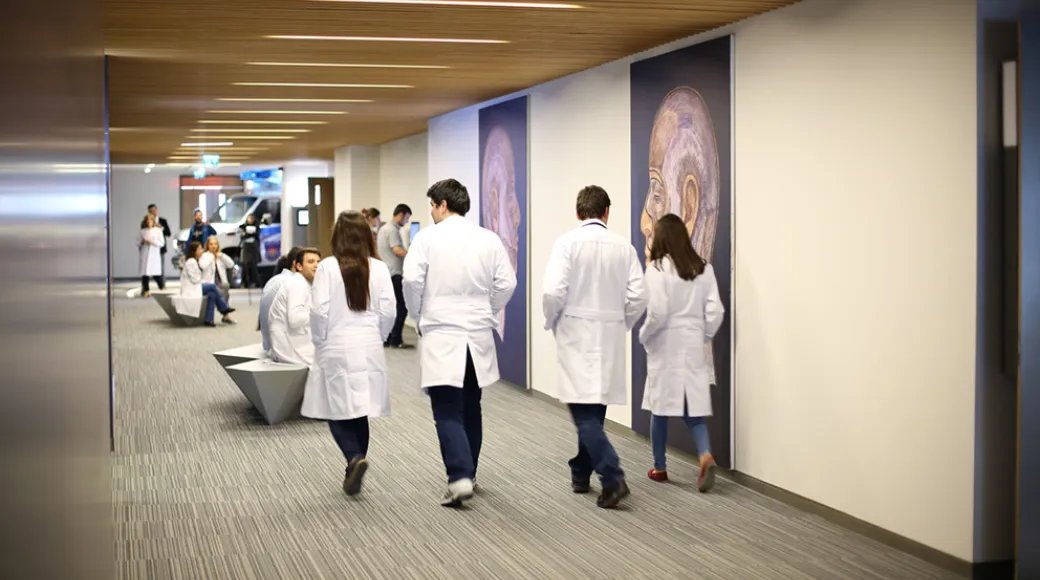
The strategic plan of the School of Medicine aims to enhance sustainable quality in medical education and to deliver a medical education program aligned with societal needs. Within this framework, maintaining the accreditation of undergraduate medical education, strengthening the competency-based structure of the curriculum, and expanding student-centered learning approaches are among the primary objectives.
Improving the reliability and validity of assessment and evaluation processes, enhancing clinical learning environments, and ensuring sustainable quality in postgraduate medical education are also key priorities. In addition, the Faculty aims to strengthen the community-oriented and community-based characteristics of the educational program, encourage students’ active participation in social responsibility projects, and continuously improve educational outcomes by monitoring the societal impact of its graduates. Through these efforts, the goal is to establish a robust, trustworthy, and sustainable model of medical education with strong academic and societal value.
 |
The Acıbadem University Faculty of Medicine Undergraduate Medical Education Program is a comprehensive six-year curriculum designed to educate physicians who possess the competencies required by the medical profession, adhere to ethical principles, and that prioritizes societal health needs. The program is developed in alignment with the National Core Education Program and relevant international strategic frameworks, and is structured with an emphasis on interdisciplinary integration, innovative educational methodologies, and social accountability.
The educational process is grounded in student-centered learning approaches, the principle of social accountability, and the promotion of a strong culture of scientific inquiry. Within this framework, students are expected to actively engage in their learning processes, assume responsibility for their academic and professional development, acquire research and critical thinking skills, and develop an awareness of societal health needs.
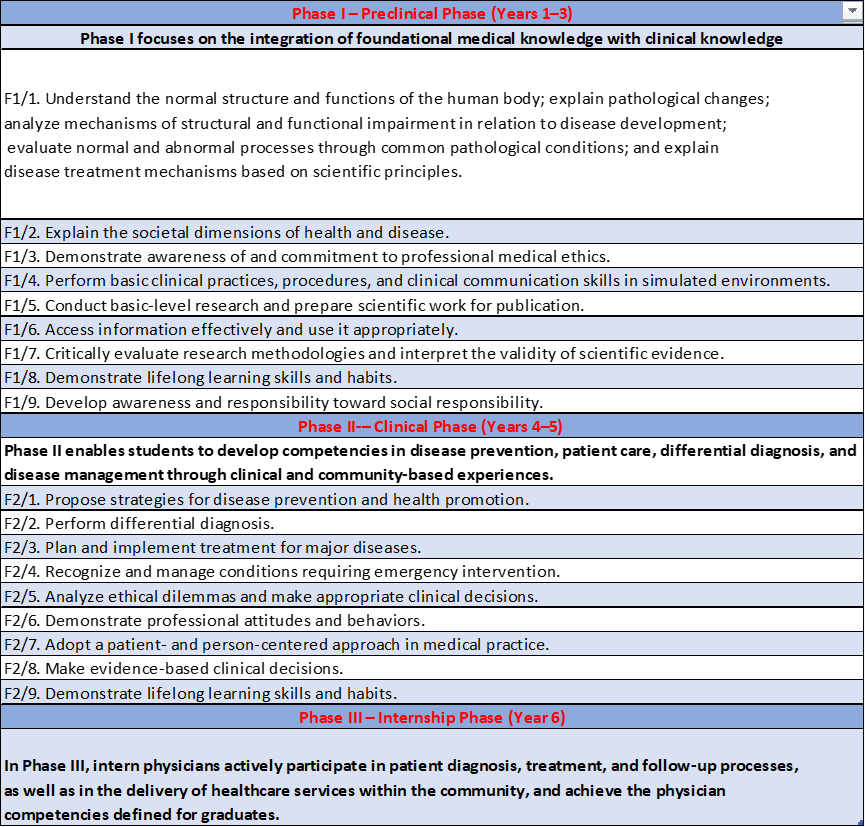
Phase I – Preclinical Phase (Years 1–3)
This phase consists of integrated course committees organized around organ systems. Basic and clinical sciences are delivered in an integrated manner. In addition, students acquire knowledge and competencies in ethics, medical humanities, research methodologies, public health, professionalism, and clinical skills.
Phase II – Clinical Phase (Years 4–5)
During this phase, students gain hands-on experience in patient management, differential diagnosis, treatment planning, and participation in healthcare delivery through compulsory and elective clinical clerkships. Clerkships are structured either as discipline-based rotations or as integrated blocks involving related specialties.
Phase III – Internship Phase (Year 6)
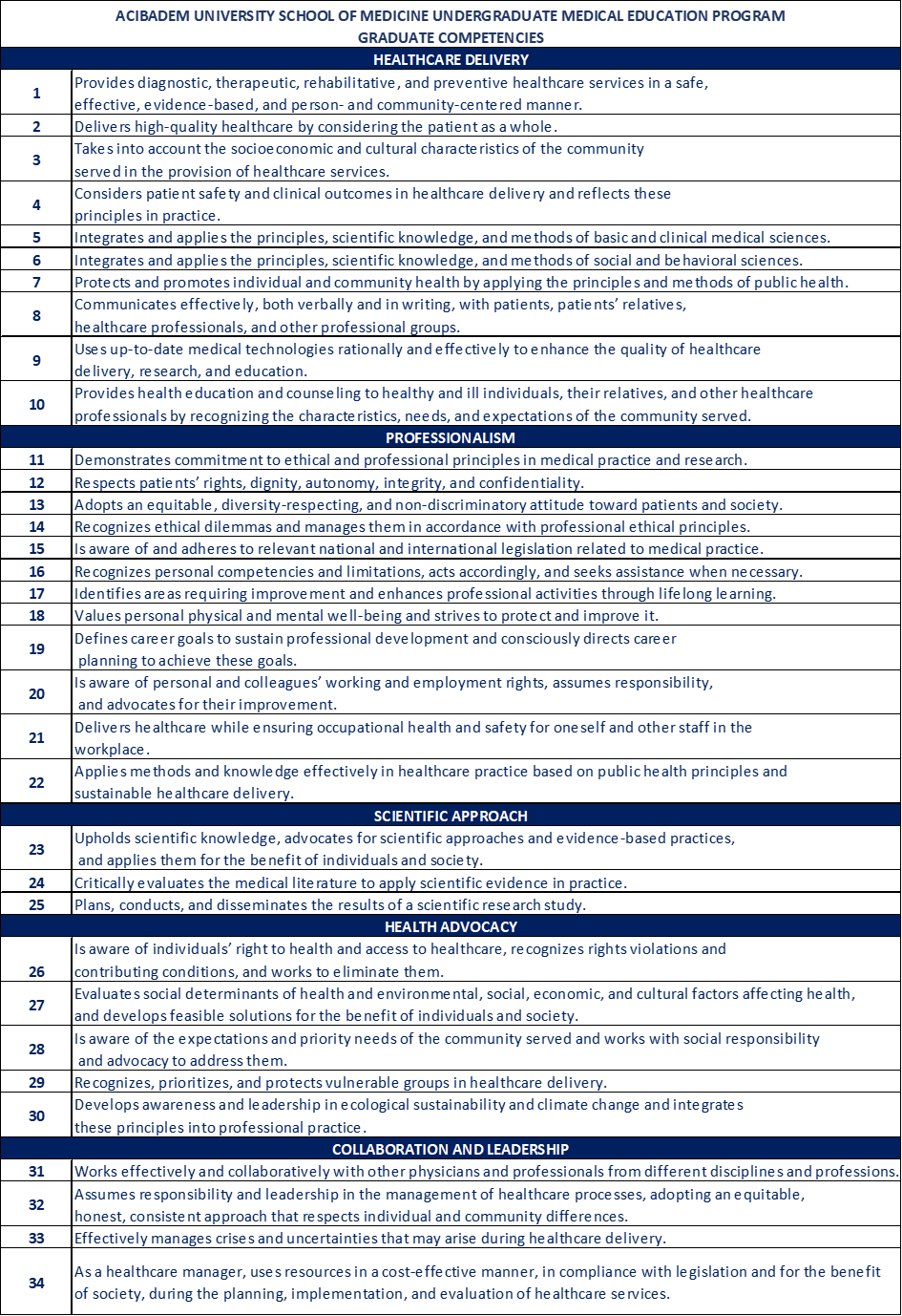
The internship phase is conducted based on a “learning through practice” approach. Students actively participate in patient care processes, including diagnosis, treatment, and follow-up, and are expected to achieve the physician competencies defined for undergraduate medical education prior to graduation.
Course Categories
Integrated Medical Courses: Consist of the Biomedical Sciences Course Committees (BSC) and the Clinical Medicine and Professional Skills (CMPS) programs.
Complementary Medical Courses: Include compulsory courses (e.g., Medical English, Biostatistics) and elective courses (e.g., Social Responsibility, Medical Language Proficiency).
Common Courses: University-wide courses offered at the institutional level.
Transition to Clinical Clerkships Program (TCC): A structured preparatory program designed to facilitate students’ transition to clinical practice.
Clinical Clerkships: Compulsory and elective clinical rotations conducted during the 4th and 5th years.
Internship Programs: Compulsory and elective clinical practice components implemented throughout the 6th year.
